

Slot Volatility Explained: Why Your $100 Lasts 20 Minutes or 2 Hours
Two players sit down at the same online slot with the same $100 bankroll. One is broke in eighteen minutes. The other is still spinning two hours later, slightly ahead. Same game, same bet size. The difference isn't luck alone — it's volatility, and most players never bother to understand it before they hit spin.
If you've ever wondered why some slots feel like a slow bleed and others feel like a rollercoaster with a loose safety bar, this is the article you should have read first.
Volatility Is the Slot's Personality, Not Its Payout
Every slot has two core numbers that matter more than the theme, the graphics, or the soundtrack: RTP (return to player) and volatility (sometimes called variance). Those comparing choices often turn to v88.ru.com.
RTP is the long-term percentage the game pays back — a 96.5% RTP slot returns $96.50 for every $100 wagered over millions of spins. Volatility is how that return is delivered. High-volatility slots pay back in rare, large chunks. Low-volatility slots pay back in frequent, small chunks. The RTP can be identical.
Consider two real examples. Starburst (NetEnt) sits at roughly 96.1% RTP with low volatility — you'll hit frequent small wins, and your balance erodes slowly. Money Train 2 (Relax Gaming) runs at 96.4% RTP with extreme volatility — you can go 300 spins without a meaningful hit, then land a bonus that pays 5,000x your stake.
Same expected return. Completely different experience.
What Volatility Actually Does to Your Bankroll
Here's the part most guides skip. Volatility determines how your bankroll behaves before the RTP math ever catches up.
- Low volatility: Wins hit often but small. Your balance looks stable. A $100 bankroll at $0.50 spins can last hours.
- Medium volatility: Moderate swings. Occasional 20x–50x hits keep you afloat between dry spells.
- High volatility: Long dead zones followed by big spikes. A $100 bankroll can vanish in 15 minutes at $1 spins.
- Extreme volatility: Built for bonus hunters with deep pockets. Bankrolls of 500+ spins are recommended, not 100.
A practical rule used by experienced players: your bankroll should cover at least 200 spins on high-volatility slots and 100 spins on low-volatility ones. If you're betting $1 per spin on a high-variance game, you need $200 minimum just to survive normal variance — not to mention luck.
Choosing a Slot That Matches Your Mood and Money
Volatility isn't about picking the "best" slot. It's about matching the game to your goal for the session.
Play low volatility if you want
- Long sessions on a small budget
- Frequent small wins to keep engagement up
- Slow, low-stress play — good for casual evenings
- Examples: Blood Suckers, Starburst, most classic 3-reel games
Play high volatility if you want
- A shot at a massive multiplier
- Thrill over longevity
- Bonus features that can pay 1,000x or more
- Examples: Book of Dead, San Quentin, Money Train series
There's no shame in either. What is a mistake is loading a high-volatility slot with a bankroll built for a low-volatility grind, then blaming the game when it eats your balance in twenty minutes.
The Same Logic Applies Beyond Slots
Volatility thinking isn't exclusive to slots. It shows up everywhere in iGaming once you know to look for it.
In blackjack, basic strategy produces low volatility — small, steady edges over time. In poker, cash games are lower variance than tournaments, and multi-table tournaments are the extreme end: you might go 30 tournaments without a final table, then bink one for 100 buy-ins. In sports betting, backing heavy favorites is low volatility, while long-shot accumulators are the equivalent of spinning a 10,000x slot.
The smartest players don't avoid volatility — they select it based on what they can afford to lose and what they want to feel. A $50 accumulator on five underdogs is fine if the $50 is entertainment money. It's reckless if that $50 was this week's grocery budget.
Three Practical Tips Before Your Next Session
- Check the volatility rating before you spin. Most reputable casinos and review sites publish it. Low, medium, high, extreme — it's usually right next to the RTP.
- Size your bets to your bankroll, not your hope. On a $100 bankroll, $0.20–$0.50 spins on high volatility is reasonable. $2 spins is a coin flip on going broke fast.
- Set a loss limit and a time limit. High-volatility slots are designed to create emotional spikes. A hard stop at 50% of your bankroll keeps one bad session from becoming a bad month.
If you're playing with a bonus, read the wagering requirements too. High-volatility slots on a low-wagering bonus can be a mathematical trap — you'll often clear wagering faster on medium-volatility games with more frequent contributions.
The Takeaway Nobody Tells You
Volatility is the difference between a game that entertains you for two hours and a game that empties your wallet before the first bonus round. It doesn't change the house edge — but it absolutely changes your experience of that edge. The next time you open a slot, don't just look at the theme. Check the variance, match it to your budget and your goal, and then spin with clear eyes. Your $100 will thank you.
tag: iGaming

James Whitcombe Author
Pack layers, waterproofs, sturdy shoes and a torch for late arrivals. A small cool bag helps if your cabin kitchen is basic.
YOU MAY ALSO LIKE
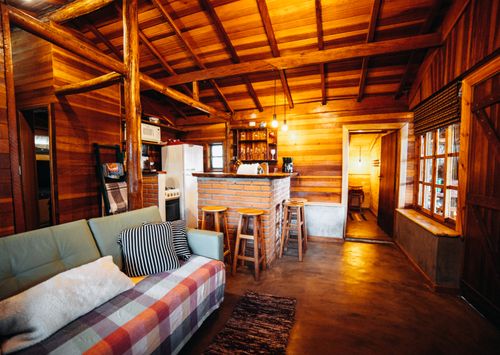
Essential Packing List for a Cosy Cabin by the Sea
Sep 22
10Rent a beach hut for shade, shelter and somewhere to store sandy gear. Check local rules on cooking, dogs and overnight use.
read more
Best Beach Huts for a Family Day at the Coast
Sep 17
10Learn how dunes form and why paths protect fragile grasses. Wear supportive shoes and carry water, as sand can be tiring.
read moreCoastal Cabins
-

ERRIC CATONA
Look for cabins using renewable energy, grey-water systems and local materials. These choices cut waste without sacrificing comfort or style.
May 19, 2016 at 5.12 pm
Reply
ERRIC CATONA
Use soft blues, warm woods and practical fabrics to bring the coast indoors. Keep clutter low so small cabins feel calm and spacious.
May 19, 2016 at 5.12 pm
Reply -
ERRIC CATONA
Museums, arcades and tea rooms keep a rainy coastal break enjoyable. Plan indoor stops between showers and book tables ahead.
May 19, 2016 at 5.12 pm
Reply
Beach Huts
Your email address will not be published.