

Slot Volatility Explained: Why Your Bankroll Matters More Than RTP
Two players sit down at the same online slot. Both start with 200 credits. Both spin the same game at the same stake for the same number of spins. One walks away with 640 credits, the other busts out in eleven minutes. Neither did anything wrong. They simply ran into the single most misunderstood concept in iGaming: volatility.
Ask ten casual players what RTP means and most will tell you it's how much a slot pays. Ask them about variance and you'll get a blank stare. That gap in knowledge costs real money, and it shapes whether a session feels thrilling or miserable. Let's fix it.
The Number Everyone Quotes (And Why It's Not Enough)
Return to Player, or RTP, is the theoretical percentage of all wagered money a game returns to players over millions of spins. A 96% RTP slot keeps 4% as house edge over the long run. That's the industry standard, though plenty of games sit lower — some jackpot progressives dip to 88% or even 85%.
Here's the catch. RTP tells you nothing about how a session will actually play out. It's an average computed across a gigantic sample size, and no individual player ever experiences the average. You experience variance. You experience the swings.
Think of it like this: RTP describes the destination, volatility describes the road. A smooth highway and a mountain pass can both lead to the same town, but only one of them is going to make you grip the wheel.
Volatility, Decoded
Volatility (also called variance) measures how far results deviate from the expected return. Low volatility means frequent but small wins. High volatility means long dry spells punctuated by rare, potentially huge payouts.
- Low volatility slots: hit frequency often 35–45%, wins commonly 0.5x to 3x your stake. Great for stretching a bankroll, boring for thrill-seekers.
- Medium volatility slots: the middle ground. Hit frequency around 25–30%, regular features, moderate top-end potential of 500x–2,000x.
- High volatility slots: hit frequency can drop to 15–20%, but maximum wins reach 10,000x, 50,000x, even 100,000x in extreme cases. Brutal on short bankrolls.
Consider two extremes. Starburst is a classic low-volatility game — you'll see constant small returns and rarely lose your balance quickly. Now think of something like San Quentin or a Money Train title: those games can eat 300 spins before coughing up anything, then produce a feature that pays 4,000x. Same RTP neighborhood, wildly different experiences.
The casino doesn't care which you pick. Your bankroll absolutely does.
Bet Sizing: The Rule Most Players Learn Too Late
The most common mistake I see is a player depositing 50 credits and spinning at 2 credits per spin on a high-volatility beast. That's 25 spins. Twenty-five. On a game where the average player might need 200+ spins just to trigger a bonus round, you've effectively bought a lottery ticket with extra steps.
A practical framework used by experienced players is the 200–300 spin rule:
- Decide how many spins you want your bankroll to survive.
- Divide your balance by that number.
- That's your stake.
With 300 credits and a target of 200 spins, you bet 1.50 per spin, not 5. If you're playing high volatility and want a real shot at a bonus, aim for 300–500 spins of runway. It sounds conservative, and it is. Conservative is what keeps you in the game long enough for variance to swing your way.
This is also why the same bankroll can feel generous on one game and suicidal on another. Slot volatility is a bankroll-management issue disguised as a game-design choice. For up-to-date information, visit iwin68club.it.com.
Volatility Beyond the Reels
This concept isn't unique to slots. It applies across the entire iGaming landscape, and understanding it changes how you approach every product.
Table games and live casino
Blackjack with basic strategy has a house edge under 1% and low variance per hand. Baccarat banker bets sit around 1.06%. Roulette is noisier — European wheels carry 2.7% edge, but straight-up number bets pay 35:1 on a 1-in-37 shot. That's high volatility in a tuxedo.
Sports betting
A heavy favorite at 1.10 odds is low variance, low reward. A five-leg parlay at 40:1 is the sportsbook equivalent of a high-volatility slot: usually dead, occasionally glorious. Same principle, different wrapper.
Poker
Cash game poker rewards patience and small edges over thousands of hands. Tournaments are pure volatility — you can play flawlessly for four hours and bust on a coin flip. Good tournament players accept this because the payoff structure is top-heavy by design.
Matching Games to Your Personality and Budget
There's no objectively correct volatility level. There's only the right fit for your bankroll, your tolerance, and your reason for playing.
- Playing to relax for an hour on a modest deposit? Low to medium volatility.
- Chasing a headline win with money you can genuinely afford to lose? High volatility, properly staked.
- Trying to clear a bonus with wagering requirements? Lower volatility protects your balance while you grind through the playthrough.
- Streaming or playing for entertainment content? High volatility produces better stories — and worse bankroll graphs.
One more tip: check the game's max win and hit frequency in the paytable or help file before you commit. Many modern slots list them outright. Two high-volatility games can differ enormously — one tops out at 5,000x, another at 100,000x. The bigger number usually comes with a longer drought.
And if a session stops being fun, that's volatility winning the psychological battle. Step away. No RTP figure in the world matters if you're playing frustrated.
What Actually Separates Winners From Statistics
Nobody beats a negative-expectation game in the long run. RTP guarantees it. What skilled players do is manage the middle part — the thousands of spins, hands, and bets between deposit and cashout where variance lives. They pick stakes their bankroll can breathe with. They choose volatility that matches their goal for the session. They stop when the plan says stop, not when emotion says one more spin.
The slots don't know your name or your balance. But you do. Treat volatility as the tool it is, and the math stops feeling like bad luck and starts looking like a decision. That shift — from passive spinning to deliberate play — is where casual gambling becomes something you actually control.
tag: iGaming

James Whitcombe Author
Pack layers, waterproofs, sturdy shoes and a torch for late arrivals. A small cool bag helps if your cabin kitchen is basic.
YOU MAY ALSO LIKE
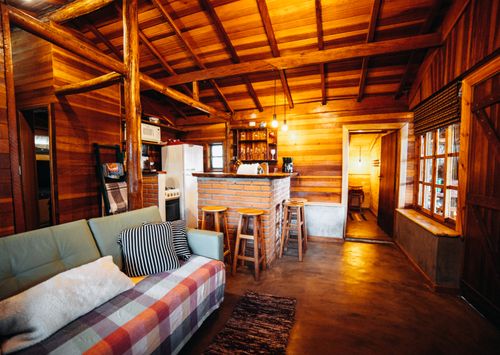
Essential Packing List for a Cosy Cabin by the Sea
Sep 22
10Rent a beach hut for shade, shelter and somewhere to store sandy gear. Check local rules on cooking, dogs and overnight use.
read more
Best Beach Huts for a Family Day at the Coast
Sep 17
10Learn how dunes form and why paths protect fragile grasses. Wear supportive shoes and carry water, as sand can be tiring.
read moreCoastal Cabins
-

ERRIC CATONA
Look for cabins using renewable energy, grey-water systems and local materials. These choices cut waste without sacrificing comfort or style.
May 19, 2016 at 5.12 pm
Reply
ERRIC CATONA
Use soft blues, warm woods and practical fabrics to bring the coast indoors. Keep clutter low so small cabins feel calm and spacious.
May 19, 2016 at 5.12 pm
Reply -
ERRIC CATONA
Museums, arcades and tea rooms keep a rainy coastal break enjoyable. Plan indoor stops between showers and book tables ahead.
May 19, 2016 at 5.12 pm
Reply
Beach Huts
Your email address will not be published.