

The House Edge Is Not Your Enemy: A Smarter Way to Play Casino Games
Every gambler has heard the phrase "the house always wins." Most repeat it like a curse. But here's the thing: the house edge isn't a conspiracy against you. It's simply the price of admission, the same way a restaurant marks up a steak. Once you understand what that edge actually is and how it behaves over time, you stop playing against the casino and start playing against your own expectations. That shift in thinking is worth more than any hot streak.
What the House Edge Really Means (and Why 2% Isn't 2%)
Take a game with a 2% house edge. New players assume that means they lose 2% of every bet. They don't. The edge is a long-run mathematical average calculated over hundreds of thousands of outcomes. In any single session, you might win 40% or 60% of your wagers. The edge only grinds you down over time, like water on stone.
This is why short sessions are friendlier to players than marathon grinds. If you sit at a blackjack table with a 0.5% edge for 30 hands, variance dominates. If you sit for 3,000 hands, the edge becomes a slow, relentless tax. The practical takeaway: decide your exit point before you sit down, not after you're down three buy-ins.
- Blackjack (basic strategy): roughly 0.5% house edge
- European roulette: 2.7% (single zero)
- American roulette: 5.26% (double zero — avoid it)
- Baccarat (banker bet): around 1.06%
- Video slots: typically 2–8% depending on RTP
Notice the spread. A player betting $10 a hand at blackjack and a player betting $10 a spin on a low-RTP slot are not in the same universe of expected loss, even if they spend identical time at the table.
The Slot Machine Doesn't Care About Your Last Spin
Slots are the most misunderstood product in the building. Thanks to random number generators, every spin is independent. The machine that just paid a $4,000 jackpot is no hotter or colder than the one beside it. "Due for a win" is a fantasy sold by people who've never read a PAR sheet.
What actually matters is RTP (return to player) and volatility. An RTP of 96% means that, over millions of spins, the machine returns $96 for every $100 wagered. Volatility describes how that return is distributed. Low-volatility slots drip small wins regularly. High-volatility slots starve you for long stretches, then drop a monster. Neither is better — but they suit different bankrolls and temperaments.
Actionable tip: pick slots with published RTPs of 96% or higher. A few percentage points of RTP sounds trivial until you run the numbers. On $500 of wagering, the difference between 94% and 97% RTP is $15 of expected loss. Over a year of casual play, that gap buys a nice dinner.
Reading the Fine Print
Many jurisdictions now require casinos to publish RTP information, often in the game's help menu. Developers like NetEnt, Play'n GO, and Push Gaming typically publish 96%+ versions of their titles. Some operators quietly run lower-RTP variants of the same games — a 94% version of a popular slot exists in certain markets. It costs you ten seconds to check. For a closer look, soikeonhacai.ae.org has helpful details.
Poker Is the One Game Where Skill Beats the Rake
Everything changes at the poker table. Here the house doesn't bet against you — it collects a rake, typically 5% of the pot capped at $3 to $5 in live low-stakes games. Online, the rake is often uncapped or capped higher. That rake is your real opponent, and beating it requires genuine edge.
The good news: in low-stakes live games, that edge exists. Most $1/$2 no-limit players are loose, passive, and call too much. A disciplined player who folds trash hands, bets for value, and observes opponents can profit consistently. The bad news: in $2/$5 and above, the average opponent is sharp. Your edge shrinks while the rake stays the same — which is why many pros say the rake is unbeatable above a certain stake.
- Track your sessions. Hours, buy-in, cash-out. Ego hides losses; spreadsheets don't.
- Study position. Play tight from early seats, loosen up on the button.
- Respect the rake. If it's $5 per pot and you're winning small pots, the house eats your profit.
- Pick soft tables. Game selection matters more than any bluff.
Sports Betting: Line Shopping Is Free Money
If you bet on football or basketball, the single highest-value habit is shopping the line. The same game often sits at -3 at one sportsbook and -2.5 at another. That half-point is worth real money over hundreds of bets, especially on key numbers like 3 and 7 in NFL spreads.
Beyond line shopping, understand that the vig — usually -110 on each side — means you need to win 52.4% of your bets just to break even. That's a tough bar. So don't chase parlays with 12% hold, and don't tail so-called experts on social media who've never shown a verified record. Bet small, bet consistently, and treat every wager as one leaf in a very large tree.
Bankroll Management: The Only Banker That Matters
Casinos love a player running on adrenaline. That player bets bigger after wins, chases after losses, and treats their balance like a scoreboard instead of a budget. Correct bankroll management is unglamorous and decisive.
- Set a monthly gambling budget you can lose without flinching.
- For poker, keep at least 20 buy-ins for cash games and 50 for tournaments.
- For slots, set a loss limit per session and a time limit. Both. Not one.
- Never bet money allocated to rent, savings, or someone else's bills.
- Take breaks. Tilt is the silent killer of bankrolls.
The players who survive for decades are not the ones with hot hands. They're the ones who never let a bad night become a bad year.
The Bottom Line
Nobody beats the house edge at roulette. Almost nobody beats the rake at mid-stakes poker. But that was never really the point. Gambling is entertainment with an entry fee baked in, and the people who enjoy it most are the ones who understand exactly what that fee is. They pick games with fair edges, they shop lines, they check RTPs, and they leave when they said they would. Do that, and the math stops being a threat — it becomes a tool you use instead of one that uses you.
tag: iGaming

James Whitcombe Author
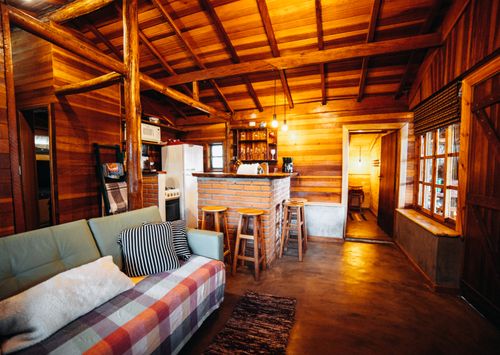
Pack layers, waterproofs, sturdy shoes and a torch for late arrivals. A small cool bag helps if your cabin kitchen is basic.
YOU MAY ALSO LIKE
Essential Packing List for a Cosy Cabin by the Sea
Sep 22
10Rent a beach hut for shade, shelter and somewhere to store sandy gear. Check local rules on cooking, dogs and overnight use.
read more
Best Beach Huts for a Family Day at the Coast
Sep 17
10Learn how dunes form and why paths protect fragile grasses. Wear supportive shoes and carry water, as sand can be tiring.
read moreCoastal Cabins
-

ERRIC CATONA
Look for cabins using renewable energy, grey-water systems and local materials. These choices cut waste without sacrificing comfort or style.
May 19, 2016 at 5.12 pm
Reply
ERRIC CATONA
Use soft blues, warm woods and practical fabrics to bring the coast indoors. Keep clutter low so small cabins feel calm and spacious.
May 19, 2016 at 5.12 pm
Reply -
ERRIC CATONA
Museums, arcades and tea rooms keep a rainy coastal break enjoyable. Plan indoor stops between showers and book tables ahead.
May 19, 2016 at 5.12 pm
Reply
Beach Huts
Your email address will not be published.