

Why Smart Bettors Treat Slots Like a Math Problem
Here's a confession from someone who has spent more hours than he'd like to admit staring at spinning reels: the players who actually last aren't the ones with the best intuition. They're the ones who understand that a slot machine is a math problem wearing neon clothing. That single shift in perspective separates the person who blows their budget in twenty minutes from the one who's still having fun three hours later, cash intact enough to buy dinner.
This isn't a lecture about quitting gambling, and it's not a fantasy about beating the house. It's a practical look at the mechanics behind casino games, poker, and sports betting, written for people who want to be smarter than the average punter. Let's dig in.
RTP Is Not a Promise, It's an Average
The first thing every iGaming player should internalize is that Return to Player percentage describes a mathematical expectation over millions of spins, not your session. A slot advertised at 96% RTP doesn't hand you back $96 for every $100 you wager. It means that across an enormous sample size, the machine is designed to return 96 cents on the dollar and keep four cents as house edge.
Those four cents look tiny, and that's exactly the trap. If you run $500 through a slot at 96% RTP, your theoretical loss is $20. Push $5,000 through it and the expected loss climbs to $200. This is why high-stakes players on low-edge games can still bleed fast: volume times edge equals damage.
- Online slots typically sit between 94% and 97% RTP, with some progressive jackpot titles dropping as low as 88%.
- European roulette returns about 97.3%, while American roulette with its double zero tumbles to 94.7%.
- Blackjack with basic strategy can reach 99.5% or higher depending on the rule set.
- Sports betting margins vary wildly, but a standard two-way market often carries around 4% to 5% built in.
- Poker is different: the house takes a rake, so your edge comes from outplaying other players, not the casino.
If you take nothing else away, take this: chase games with low house edge, and stop judging a slot by its theme.
Volatility Decides How the Ride Feels
Two slots can share the same RTP and deliver completely different experiences. That's variance, otherwise known as volatility, and it's the single most underrated concept for casual players.
A high-volatility slot pays rarely but can hit enormous multipliers. Think of it as a lottery ticket machine with long dry spells. Low-volatility games pay small amounts frequently, keeping your balance steady but rarely producing life-changing wins. Neither is better; they just suit different temperaments and bankrolls.
Online casinos often publish volatility ratings from one to five, and progressive jackpot games almost always land in the highest tier. If you're playing on a small bankroll, low and medium volatility keeps you in the game longer. If you're hunting a big score and can stomach long losing streaks, high volatility is your lane.
A Practical Bankroll Rule
One useful heuristic: your session bankroll should be at least 100 times your average bet for low-volatility games, 200 times for medium, and 300 or more for high-volatility titles. It's not a guarantee, but it prevents the most common disaster, which is running dry in five minutes because you bet $5 a spin on a brutal jackpot slot with only $50 loaded.
Poker Is a Skill Game With a Rake Problem
Poker sits awkwardly in the gambling conversation because, unlike slots, a skilled player can win long term. That said, the rake is a silent tax that eats into everyone's profits, and casino tournaments add another layer with their fee structure. saowin.za.com goes into the finer points.
In cash games, the house typically takes a small percentage of each pot up to a cap, often between 2.5% and 10% depending on the stakes and location. At micro stakes, that rake can be brutal relative to the money in play, which is why serious grinders often move up limits where the cap works in their favor.
- Understand position. Acting last gives you information, and information is money.
- Study ranges, not specific hands. Good players think in combinations, not hunches.
- Track your results honestly. A spreadsheet beats a feeling every single time.
- Respect game selection. A soft table at lower stakes beats a shark tank every night.
The dirty secret of online poker is that recreational players vastly outnumber professionals, but the professionals cluster at certain stakes and times. Choosing when and where you sit is often worth more than any advanced strategy.
Betting Markets Reward Discipline, Not Picks
Sports betting has exploded in popularity, and with it a flood of bad advice. Here's the uncomfortable reality: most bettors lose, not because they can't pick winners, but because they can't manage prices and emotions.
Bookmakers build a margin into every market that reflects their assessment of probability plus profit. When you see odds of 1.90 on both sides of a coin-flip event, the implied probabilities add up to more than 100%, and that overspill is the house's cut.
Value betting flips the question. Instead of asking "who will win?", ask "is this price generous relative to the true probability?" If you believe a team has a 55% chance to win, a bet at even money is profitable long term, and a bet at 1.50 is a losing proposition no matter how confident you feel.
- Shop multiple books; line differences of a few percentage points compound dramatically over hundreds of bets.
- Track your closing line value: if your prices consistently beat the final market before kickoff, your process is sound even during losing streaks.
- Avoid parlays and same-game combos as a default; they're fun, but the margin stacks against you.
- Set a strict unit size, often 1% to 2% of your bankroll, and never exceed it after a bad beat.
The House Always Has an Edge, So Choose Yours Wisely
No responsible piece of iGaming writing pretends you can outrun the math forever. The goal isn't to beat the casino at its own game; it's to be selective about which games you play, how much you wager, and how long you sit at the table.
A player who enjoys slots occasionally with modest stakes is doing almost nothing wrong mathematically compared to the person grinding high-rake side bets at the blackjack table. Both are paying for entertainment, but one is paying a fair price and the other is getting fleeced.
The next time you open a casino app or a sportsbook, ask three questions. What's the house edge here? How volatile is this game? Does my bankroll support the number of spins, hands, or bets I'm about to make? Answer those honestly and you'll already be sharper than most of the crowd.
Gambling should be treated like any other paid hobby: budget for it, enjoy it, and never spend money you'd miss. The math won't flatter your ego, but it will keep you in the game long enough to actually have fun.
tag: iGaming

James Whitcombe Author
Pack layers, waterproofs, sturdy shoes and a torch for late arrivals. A small cool bag helps if your cabin kitchen is basic.
YOU MAY ALSO LIKE
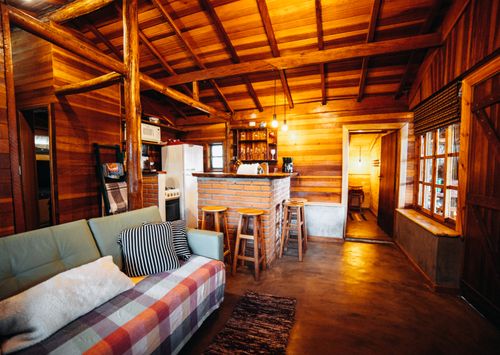
Essential Packing List for a Cosy Cabin by the Sea
Sep 22
10Rent a beach hut for shade, shelter and somewhere to store sandy gear. Check local rules on cooking, dogs and overnight use.
read more
Best Beach Huts for a Family Day at the Coast
Sep 17
10Learn how dunes form and why paths protect fragile grasses. Wear supportive shoes and carry water, as sand can be tiring.
read moreCoastal Cabins
-

ERRIC CATONA
Look for cabins using renewable energy, grey-water systems and local materials. These choices cut waste without sacrificing comfort or style.
May 19, 2016 at 5.12 pm
Reply
ERRIC CATONA
Use soft blues, warm woods and practical fabrics to bring the coast indoors. Keep clutter low so small cabins feel calm and spacious.
May 19, 2016 at 5.12 pm
Reply -
ERRIC CATONA
Museums, arcades and tea rooms keep a rainy coastal break enjoyable. Plan indoor stops between showers and book tables ahead.
May 19, 2016 at 5.12 pm
Reply
Beach Huts
Your email address will not be published.