

How to Find Quiet Beaches Near Popular Seaside Towns
Start With the Crowd Clock, Not the Map
The most reliable way to find a quiet beach near a busy seaside town has nothing to do with secret knowledge. It is about timing. In towns like St Ives, Whitby, Tenby or Brighton, the pattern is remarkably consistent: car parks fill between 9am and 10am, the seafront hits its peak between 11am and 4pm, and by half past four in the afternoon the whole place begins to exhale.
So the first trick is simply to invert the day. Arrive early — genuinely early, so you are on the sand by 8am. You will have two or three clear hours before the first families arrive with windbreaks and cool boxes, and the light is far better for photographs. The second window is late afternoon and early evening, when day-trippers drive home and the beach belongs to locals, dog walkers and anyone sensible enough to have booked a late dinner.
Weekdays outside school holidays are noticeably quieter than weekends. If you can only visit in August, aim for a Tuesday rather than a Saturday and the difference is often startling.
Follow the Local Bus, Not the Car Park
Car parks cluster where there is space, and people cluster around car parks. Local buses do something different: they stop where the road happens to go, which is frequently beside a small cove, a slipway or the start of a footpath that nobody in the main town bothers with.
- Ask the driver. A simple "which stop is the quietest beach?" often gets you a far better answer than any guidebook.
- Look for request stops and route endings where the bus turns around — these are often little coves or village slipways.
- Open-top coastal services in summer link several beaches in one journey, letting you hop off somewhere small and hop back later.
- National Trails — the South West Coast Path, the Pembrokeshire Coast Path, the Cleveland Way — pass dozens of beaches that have no parking at all, only a steep set of steps down.
The walk down is usually the filter. If a beach requires twenty minutes of footpath over a field, it will be half as busy as the one beside the car park.
Reading the Map for Signs of Quiet
A good coastal map tells you where the crowds will be before you leave the house. Learn to read absences as much as features.
- No facilities symbol. No café, no toilets, no car park symbol means fewer people simply by default.
- Steep steps or a long footpath. Anything that rules out prams and trolleys thins the crowd dramatically.
- Place names. In Cornwall and Wales, "porth", "pwlldu", "combe", "wyke" and "-mouth" often mark small coves rather than resort beaches.
- A single-track lane. If the road to a beach is narrow with passing places, coach parties cannot reach it.
- Mapped slipways. A slipway usually means a small working beach rather than a resort.
Cross-check with tide times before you commit, because a cove that is generous at low water can be a strip of shingle at high tide.
Pack for a Beach With No Facilities
Quiet beaches are quiet precisely because nobody has built anything there, so treat it as a self-sufficient trip. Take more water than feels necessary, plus food, sun cream, a windbreak or shelter, and a basic first-aid kit. There is no lifeguard at most small coves, so swim where you can see the seabed clearly and never alone.
Carry everything back out with you, including fruit peel and wet wipes. Take cash for a village pub or shop to break up the day, since signal and card machines are unreliable in steep valleys. A lightweight bag for rubbish is worth its weight in a rucksack.
Tides, Weather and Knowing When to Turn Back
Small coves are more exposed to tide than big resort beaches. Check a tide table for the nearest port, not the town you drove through, and remember the rule of twelfths — the water rises fastest in the middle hours of the flood. Beaches that connect to headlands at low water become cut off surprisingly quickly, and cliffs shed rock after heavy rain.
Coastal weather turns fast. If the wind picks up from the sea and the swell builds, move to higher ground and enjoy the view instead of the swim. Rip currents are the real risk on unpatrolled beaches: they look like calm gaps between breaking waves. If caught, don't fight it — swim parallel to the shore until you are free of it.
Being a Welcome Guest in Small Places
Villages near quiet beaches have narrow lanes, limited parking and residents who have put up with a great deal of thoughtless visiting. Park only where it is clearly permitted, never block a passing place, a gateway or a field entrance, and shut gates behind you. Keep dogs under control and check seasonal dog bans on the main beach before assuming the rules apply elsewhere. Light no fires or disposable barbecues on dry grass or pebbles.
Spend a little in the village shop or the pub at the end of the day. It is a small gesture that keeps small places welcoming, and it is the reason the quieter beaches near popular towns stay worth finding.
tag: Seaside Towns

Emily Hartley Author
A few sharp knives, a large pan and sealed containers make cabin cooking easier. Check what is provided before adding weight to your bags.
YOU MAY ALSO LIKE
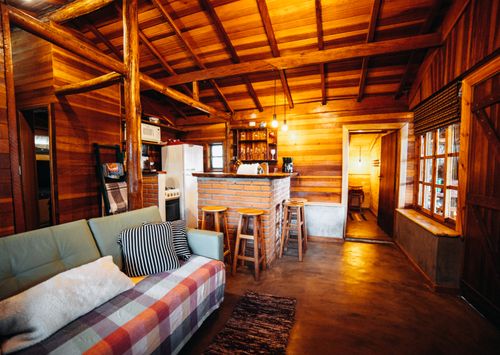
Cabin Kitchen Essentials for Simple Coastal Meals
Jun 29
10Choose eco stays with clear recycling, composting and energy policies. Good hosts explain what guests should separate and why it matters.
read more
Eco Stays with Recycling and Composting Facilities
Jun 24
10Look for cabins with enclosed gardens, hard floors and nearby dog-friendly beaches. Check rules on leads, bins and leaving pets alone.
read moreCoastal Cabins
-

ERRIC CATONA
Compare location, insulation and access before booking a coastal cabin. A short walk to the beach matters more than a fancy deck in wet weather.
May 19, 2016 at 5.12 pm
Reply
ERRIC CATONA
Pack layers, waterproofs, sturdy shoes and a torch for late arrivals. A small cool bag helps if your cabin kitchen is basic.
May 19, 2016 at 5.12 pm
Reply -
ERRIC CATONA
Rent a beach hut for shade, shelter and somewhere to store sandy gear. Check local rules on cooking, dogs and overnight use.
May 19, 2016 at 5.12 pm
Reply
Beach Huts
Your email address will not be published.