

Coastal Cabin Interiors: Simple Ways to Create a Nautical Feel
A coastal cabin or beach hut is a compact stage for the sea. You do not need a big budget or a complete refurbishment to make it feel nautical. The trick is to work with the space you have, choose colours and textures that echo the shoreline, and keep the clutter down so the room breathes. Whether you are sprucing up a holiday let or making your own seaside bolthole feel calmer, these simple ideas will help you bring the coast indoors.
Start with a Soft, Salty Colour Palette
Nautical does not have to mean navy and white stripes everywhere. In a small cabin, strong contrast can feel busy. Instead, build your base from soft, chalky blues, sea-glass greens, warm whites and sandy neutrals. These shades reflect light, blur the edges of a compact room and create the same soothing feeling as looking out at a calm horizon.
Paint the walls, ceiling and woodwork in the same soft colour to make the space feel taller and more unified. If you want a bolder accent, use it sparingly: a single navy cushion, a deep blue lampshade or a strip of coral on a painted stool. Think of the 60-30-10 rule — 60 per cent soft base, 30 per cent warm wood or neutral, 10 per cent accent — and the result will feel considered rather than themed.
- Try: chalky blue, pale grey-green, oyster white, driftwood grey, soft sand.
- Avoid: too many stark whites, which can feel cold in a north-facing cabin.
- Quick win: paint the ceiling the same colour as the walls to stop the room feeling boxy.
Warm Woods and Natural Textures
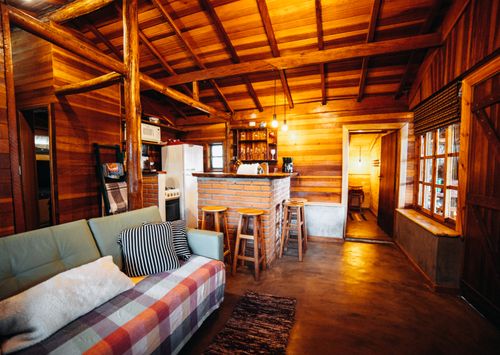
Wood is the sailor’s friend. It adds warmth, hides sand and looks better as it ages. Choose light or mid-toned timbers such as oak, ash, bamboo or reclaimed boards. A matte oil finish is more forgiving than a high-gloss varnish, especially in salty air, and it feels softer underfoot and under hand.
You do not need to clad every wall. A single wooden shelf, a peg rail by the door or a simple stool can be enough. Mix in other natural textures — rattan, jute, cork, linen — to stop the room feeling flat. In a small cabin, keep furniture low and leggy so sightlines stay open. A chunky dark wardrobe will swallow the space; a slim bench with storage underneath will not.
- Use: wooden hooks, rope-wrapped handles, driftwood coat pegs, a small timber side table.
- Choose: furniture with tapered legs and open frames to show more floor.
- Maintain: wipe wood with a damp cloth and re-oil once a year to protect against damp.
Choose Fabrics That Can Take the Sand and Spray
Coastal interiors need fabrics that work hard. Linen blends, cotton canvas, wool and solution-dyed acrylic are all good choices. They feel natural but cope with damp, salt and the occasional sandy bottom. Removable covers are your best friend: zip-off cushion covers and washable throws mean you can refresh the room in minutes after a beach day.
Layer textures rather than patterns. A woven wool throw, a couple of canvas cushions and a flatweave cotton rug will add comfort without visual noise. If you want a nautical nod, use a single stripe or a subtle signal-flag motif on one cushion. For curtains, choose a thermal or blackout lining to keep the cabin warm on chilly evenings and to protect furniture from fading.
- Best bases: linen blend sofa covers, cotton canvas blinds, wool blankets, easy-clean outdoor rugs.
- Steer clear of: delicate silks, pale velvet and anything that needs dry cleaning.
- Practical trick: keep a lidded basket of washable throws and spare covers for quick changes.
Keep Storage Clever and Clutter Low
Small cabins feel calm when surfaces are clear. Clutter makes a compact room shrink. Before you buy another ornament, look at where things can hide. Lift-up bench seats, under-bed drawers, wall-mounted peg rails and slim shelves use space that would otherwise be wasted. Baskets are brilliant for corralling sunscreen, books, towels and beach toys, and they add texture at the same time.
Adopt a one-in, one-out rule for holiday clutter. If a new shell or souvenir comes in, something else goes out. Keep daily essentials — mugs, tea, a torch, a deck of cards — within easy reach, and store the rest away. A small cabin does not need to be bare, but it should feel aired and easy to tidy.
- Use: hooks behind doors, over-door organisers, stacking baskets, a foldaway table.
- Hide: charging cables in a lidded box and shoes in a boot tray by the door.
- Edit: keep only three decorative objects on show at any one time.
Layer Lighting for Long Evenings
Coastal light is bright in the day and soft at dusk. Replicate that indoors with layered lighting rather than one harsh ceiling bulb. Warm white bulbs — around 2700K — make wood and blue tones glow. Dimmable wall lights, a bedside reading lamp and a rechargeable table lamp you can move outside are all useful in a beach hut or cabin.
Mirrors are another quiet trick. A simple round or rectangular mirror opposite a window bounces light around a small room and makes the view feel doubled. Avoid cool white or blue-toned bulbs, which can make a cosy cabin feel clinical. Battery-operated LED candles are safer than real flames in a timber hut, and they still give that flickering harbour-light mood.
- Layer: ceiling light on a dimmer, wall sconces, a table lamp, a small floor lamp.
- Position: reading light near the bed or chair, not in the middle of the ceiling.
- Add: a mirror and a light-coloured blind to maximise daytime brightness.
Add Nautical Details Without the Theme-Park Feel
The best nautical interiors hint at the sea rather than shout about it. Choose two or three details and let them speak. A length of rope as a curtain tieback, a framed local map, a driftwood coat hook, a signal-flag cushion or a simple model boat on a shelf can all work. The key is restraint. If every surface has an anchor, a lighthouse and a lifebuoy, the room will feel like a gift shop rather than a retreat.
Natural finds are often the most effective: a piece of sea-worn glass in a dish, a few shells in a clear jar, a pebble from the beach outside. Rotate them with the seasons so the cabin stays fresh. In winter, add a wool blanket and a warmer lamp; in summer, swap in lighter cushions and a cotton throw. With soft blues, warm woods, practical fabrics and a little breathing space, your coastal cabin will feel calm, comfortable and quietly connected to the shore.
tag: Cabin Interiors

Oliver Pemberton Author
Museums, arcades and tea rooms keep a rainy coastal break enjoyable. Plan indoor stops between showers and book tables ahead.
YOU MAY ALSO LIKE
Exploring Traditional Seaside Towns on a Rainy Day
Sep 2
10Glamping offers ready-made comfort while self-catering gives freedom and space. Consider weather, cooking habits and how much you want to carry.
read more
Glamping vs Self-Catering: Which Suits a Coastal Break?
Aug 27
10Early light reveals tracks, insects and seabirds across the sand. Take binoculars and move quietly to avoid disturbing wildlife.
read moreCoastal Cabins
-

ERRIC CATONA
Shoulder seasons bring quieter beaches but cooler evenings. Add blankets, hot water bottles and draught excluders to keep a hut snug.
May 19, 2016 at 5.12 pm
Reply
ERRIC CATONA
Flexible dates and direct owner enquiries can uncover cancellations. Sign up for alerts and be ready to pay a deposit quickly.
May 19, 2016 at 5.12 pm
Reply -
ERRIC CATONA
Refill toiletries, reusable bottles and beeswax wraps reduce plastic on a glamping break. Ask hosts about recycling before you arrive.
May 19, 2016 at 5.12 pm
Reply
Beach Huts
Your email address will not be published.